YouTube Tools

We’ve used a LOT of tools and gear to build YouTube channels. This is where we share the best production, editing, productivity, and recording gear we’ve found.

What Stage are You In?

I’m Just Getting Started

I recently started my YouTube channel and want to get the best gear I can on a starter budget.

I Want the Next Level

I’ve built my channel up and am getting good traction with views and subscribers – what’s next?

I Want Top Tier Gear

I’ve been doing YouTube for a while, and I want the best gear for high-quality YouTube production.


Starter Gear Setup

Camera: Your Current Phone/Camera (as long as it was released in the past 3 years)

Why We Picked It: Most smartphones and cameras released recently have cameras that are just fine for a person starting on YouTube. In fact, if you don’t know what most camera settings mean, your phone will probably look better.

What You Could Do: We don’t recommend using a phone as your primary camera forever (which is why we recommend other gear below), but if you’re planning to use a phone for a while, consider watching videos or buying a simple course to get really familiar with everything you can do with it, and never settle for the same style every video

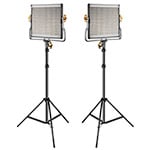
Video Lighting: Torjim Softbox Lighting Kit

Why We Picked It: We like that these lights have multiple leds (no need to replace a single bulb), and are adjustable for a variety of filming situations. Each light has a display and separate knobs on the back to adjust color temperature and brightness. When it comes to video lighting, more light over more space is most often better, because it gets rid of harsh shadows and makes a more natural look. Softbox lights are a really good option because they don’t cost as much, but still disperse light over a larger area with the box design.

What You Could Do: We have only two things we would change about these (awesome) budget lights: 1) We wish the brightness could get just a biiit brighter for more lighting situations, and 2) the power cord could be longer.

Compared to the Competition: We’ve tried several budget brands of softboxes (Yicoe, and Mount Dog to name a few), and while this set costs slightly more than many you’ll find, the brand (we’ve used Neewer lights for years) and added adjustable features like color temperature and brightness WITHOUT needing a remote are totally worth it.

Microphone: DJI Mic Mini

Why We Picked It: We recently got these and now they’re my go-to for almost every video. The mic can clip to your shirt or hat, or can be connected anywhere with the magnet. The audio connects to the receiver that plugs directly into your camera or phone so the audio is already synced. You can use one mic or two at the same time.

What They Could do to Improve: This Mic Mini has good audio but it’s not perfect. The noise canceling is good but sometimes when I stop talking and then start again, the audio peaks for just a second. For flawless audio, you can always upgrade to the DJI Mic 3.

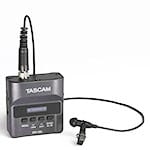
Compared to the Competition: We’ve used lots of mics over the years and these are not only super easy and convenient, they also cost less than the Tascam lav mics that have been our go-to for years.

YouTube Growth Tools: VidIQ and Tubebuddy

(Updated Sept. 2023) Why We Picked Them: Over that last year or 2 we realized that we didn’t end up using YouTube growth tools in our everyday processes.  We tested both tools head-to-head and realized that both have some decent features.  

Rather than only using one tool, we would recommend using the FREE VERSIONS of both tools to see what you find helpful.  

Eventually you might find you like one better than the other, but we just couldn’t say one was objectively better. 

P.S. If you feel like you don’t need either tool, you are probably right. Like I said, we don’t use either on a day-to-day basis, so you might just go without. That’s ok too! 

Compared to the Competition: I guess you could call it a tie, but really, each tool has its strengths and weaknesses.  For small creators, trying both will be your best bet! 

Editing Software: DaVinci Resolve

Why We Picked It: While there is a paid version, the free version of Resolve is surprisingly capable without a lot of the limitations on other free softwares (like watermarks, limited video length, etc). If you’ve used other editing programs the interface is easy to get used to.

Compared to the Competition: While the CM editors typically use Final Cut Pro or Adobe Premiere, Nathan uses DaVinci Resolve to edit the videos on his personal YouTube Channel.  In nearly every case he says DaVinci Resolve will do the trick. (And there are TONS of tutorials on YouTube which makes it easy to learn)

Screen Recording & Streaming Software: OBS Studio

Why We Picked It: We’ve been blown away by just how much OBS is capable of. Want to stream from 3 different cameras, your desktop, and play a video all at once? Can do. It’s actually what we used to record with 7 webcams simultaniously in this video. It’s free, and ready to do whatever you want it to (maybe you could get it to make breakfast for you, too? It’s possible…).

What They Could do to Improve: Because of how much the software is capable of the starting learning curve can be a bit steep, but only at the beginning. Thankfully there are a lot of really good guide on how to use it.

Compared to the Competition: If you do a lot of YouTube livestreams (or are planning to in the future), it’s worth getting to know OBS early on, because you’re able to do things not built into YouTube (like sharing your screen, multiple cameras, and much more)

Thumbnails

Why We Picked It: Canva is a great option if you are just getting into thumbnail production.  Canva has many capabilities offered for free, and the learning curve is not too bad.  As you get more comfortable and need additional capabilities, they have additional paid options.

Compared to the Competition: They are one of the best in the business. We love that creators can get started for free while they are learning the ropes.  While there are many other design platforms out there, Canva has always been our go to.


Next Level Gear Setup

Camera: Sony ZV-1 II

Why We Picked It: The screen flips out for selfie recording, it’s lightweight, and does almost everything a bigger camera does for a much lower price tag. The new version ii also has a wider angle lens than the original which is great for vlogging. The only reason we don’t use this camera more is because we’re using the Sony we recommend in the Top Tier section on this page (below).

What They Could do to Improve: Because of how much the software is capable of the starting learning curve can be a bit steep, but only at the beginning. Thankfully there are a lot of really good guide on how to use it.

Compared to the Competition: If you do a lot of YouTube livestreams (or are planning to in the future), it’s worth getting to know OBS early on, because you’re able to do things not built into YouTube (like sharing your screen, multiple cameras, and much more)

Gimble Camera: DJI Pocket 3

Why We Picked It: This little thing is almost perfect if you do a lot of vlogging or shots walking around. Why? Because it really is as small as it looks, and packs a solid 4K camera, stabilization, a selfie screen into a frame you could forget you put into your pocket. We also enjoy the cool features like face-follow and smooth transition between stabilization options. Sometimes we just wish we had an excuse to use this camera more. Maybe we need to, you know, go outside more? 

This version also has extra battery and a stand. Also, it connects to the DJI mic we recommend, so you don’t even need to use a mic receiver with this, just the little transmitter.

What They Could do to Improve: Not a big deal, but becaue it’s so different there is a learning curve upfront. We also wish the price was just a little bit lower, but hey, they’re packing a camera, screen, and gimbal into something just bigger than a pack of gum.


Action Camera: DJI Action 6

Why We Picked It: I use and action cam more and more and this one from DJI is my favorite. If you’re filming outdoors a lot, need a wide angle, need slow motion or timelapse, this is the go-to. It handles lighting variation really well and even though your phone can do timelapse, this can run really long timelapses without occupying your phone, which you might need for something else while filming a long timelapse.

Compared to the Competition: GoPro is the stiffest competition in this space and their action cameras are great too. I’ve come to like the DJI so I’m more familiar with its controls. Also, if you’re using DJI’s mics they pair directly to their action cam so…


Tripod: K&F Concept 73 Inch

Why We Picked It: Most low-to-mid-end tripods are awful. This one like really isn’t.

We own two of these and they’re the perfect blend of durability and capability vs price. Most tripods don’t go as high as this one (when you’re tall, that matters, okay?), and this tripod also allows for ultra adjustable close up shots with a unique inverted design. It also folds into a really compact space for transport, and can convert into a monopod.

What They Could do to Improve: Because it’s sooo adjustable, it can take extra steps to get it just how we want it. It’s a pro and a con.


Video Lighting: Falcon Eyes RX-18TDX

Why We Picked It: This is the BEST video light we’ve ever tried. We’ve solved 95% of every YouTube video lighting issue just by buying this light. It’s larger with an “egg crate” cover that disperses the light evenly, and eliminated sharp shadows without being too much. You’ll need a stand for it like this one, then once you have it set up, you’re good. Our videos got DRAMATICALLY better when we added this light to the setup.

Compared to the Competition: The CM team has tried a variety of lights, from panels, ring lights, soft boxes, and much more expensive versions (We mention one in the Top Tier section below), but the Falcon Eyes looks the best on video hands down.


Video Accent/RGB Lighting: IVISII G2 Pocket Light

Why We Picked It: RGB pocket lights are some of the most versatile lights to add to your recording setup as either a background accent (like we use in virtually every Channel Makers video) or a hair light to give you a “3D” look on camera.

We made a video where we bought and tested 7 top RGB lights, and the IVISII G2 won in multiple categories. The price + value of this light is just unbeatable.

What They Could do to Improve: We wish this light had is an app to make setting up multiple lights easier, especially if we’re using different light styles or colors for different shots or videos.


Lavalier Microphone: DJI Mic 3

Why We Picked It: This is everything we like about the DJI Mic Mini but with better audio quality and more customizability. The mic can clip to your shirt or hat, or can be connected anywhere with the magnet. The audio connects to the receiver that plugs directly into your camera or phone so the audio is already synced. You can use one mic or two at the same time.

Compared to the Competition: We’ve used lots of mics and these work the best and are easiest to use right out of the box, even compared to other similar transmitting mics.

Voiceover/Streaming Microphone: Rode NT-USB Mini

Why We Picked It: If you’re doing more livestreams or stationary recording, the Rode NT-USB Mini is a solid option. What we like about it is 1) audio is solid, 2) good build and weighted base means it’s not going to move around and break if you accidentally bump it, and 3) it’s small and looks dang good so you’re not worried if it makes a cameo in your videos.

What They Could do to Improve: I wish I could adjust the mic volume on the microphone itself. The only volume knob is the one for the volume in headphones if you have headphones plugged right into the mic. Instead you adjust the volume in your streaming or recording software

Editing Software: Final Cut Pro

Why We Picked It: Final Cut is FAST, inexpensive since you don’t have to pay a monthly subscription and works beautifully for us since the whole team uses the Mac platform.

What They Could do to Improve: It’ll fill up your hard drive fast if you don’t regularly delete generated files manually; we would love a more automated solution.

Compared to the Competition: Editor Cody prefers Adobe Premiere. It’s more capable but also more complicated if you’re not a full-time editor. Also, if you’ve been using DaVinci Resolve and like it, just keep using it. Editing software is definitely a matter of personal preference.


Top Tier Gear Setup

Camera: Sony a6700

Why We Picked It: Before doing YouTube, we’ve owned or used nearly every single model of DSLR/mirrorless camera currently in production.  The a6700 is small and light, has a flip-up LCD screen so you can see yourself when recording, excellent video quality, near-perfect autofocus, and it’s reasonably priced. The battery is much larger than the previous models and there is no 30 minute video record limit! There really isn’t much more we could ever ask for in a YouTube camera.

Compared to the Competition: Panasonic makes some cool cameras for vloggers with neat advanced video features, but their autofocus SUCKS.  Canon and Nikon have each released their mirrorless cameras now, but frankly they’ve disappointed.  The a6500 is nice but doesn’t have the front-facing LCD.  There are some excellent full-frame cameras but they are pretty pricey for making a vlog and the lenses are much larger and heavier.  Fuji’s cameras are fun to shoot with the aperture ring on the lens, but autofocus in video is still lagging.  In our opinion, if you’re using a camera strictly for YouTube, it’s tough to beat the a6700. 

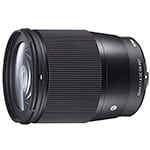
Why We Picked It: Generally, we prefer zoom lenses, but for vlogging/YouTube videos we usually want to be pretty close to the camera so it feels more personal.  For us, the 16mm focal length on a crop sensor camera is perfect.  Plus, it’s crazy fast so we can slightly blur out the bookshelf behind our desk in our Youtube videos. We use this lens in 90% of our Youtube videos now.

Compared to the Competition: Before we started using this lens, we were using the Sony 18-105.  We still use that lens for some outside shots where we need a longer focal length, but it’s rare.  It wasn’t fast enough for what we wanted.  Sony also makes a 16mm, but it is way more expensive for arguably no better quality.

Zoom Lens: Tamron 17-70 f/2.8

Why We Picked It: Sometimes, especially when filming outdoors, I need a zoom lens. This one gives me a decent zoom range but goes almost as wide as the sigma lens. It’s also faster than most zoom lenses so I can still get the blurry background even in pretty shallow shots.

Compared to the Competition: For outside shots, I actually still prefer this lens over the Sony 18-105. This one is a manual zoom, not electronic, which I actually prefer because the electric zooms reset whenever the camera goes to sleep. This one stays where I put it. Plus, the Tamron is way less expensive than the Sony lenses and I’ve still loved the quality.

ND Filter: K&F Concept 2-400 67mm

Why We Picked It: I only use this when I film outdoors. But when I film outdoors I pretty much always use it. Light from the sun is so much brighter than indoor lighting that you end up closing off the aperture a ton and getting flat shots. For good color and depth of field, this inexpensive little filter is vital! K&F also makes little ND filters like this for the DJI action cam.

Compared to the Competition: I have this filter and the Tiffen one with the same specs. Tiffen’s is slightly better, but costs almost 3x as much. But if you want the best, here it is.

Tripod: SIRUI Traveler 7C 65.55 in

Why We Picked It: This tripod is just so smooth; everything about it oozes quality. It’s also lighter than the K&F tripod we recommended, but less versatile, shorter, and more expensive. But if you take your tripod with you and have to carry it a lot, you’ll be glad you got this one.

I’m also glad to see Sirui finally put out a tripod with a center stock. That’s so helpful for fine height adjustment. But if you really want to save on weight, Sirui has some traveler tripods that are even lighter, and part of that is because they don’t have a center stock.

Compared to the Competition: Where we’ve had many cheaper brands of tripod lose parts (still don’t know where all my tripod feet went) or break, we’ve never had any issues with this one.

Video Lighting: Falcon Eyes RX-18TDX

Why We Picked It: We already recommended this one in the Next Level Tier on this page, because it’s just so good. We use this in almost every indoor video as our primary light across all of our channels.

Compared to the Competition: We got a much higher end video light a few months after getting the Falcon Eyes, and it just wasn’t as good. (If you’re curious it was this one, that turned out to be ~twice the price when you factor in a lighting box to go with it). The Falcon Eyes was more compact, lighter weight, more adjustable, and when it came down to it, just looked better.

Video Accent and RGB Lighting: Aputure MC RGBWW

Why We Picked It: Solid build, excellent color accuracy, and brightness, designed for professional lighting set ups, we love this RGB light. I really like the magnets on the back. I’ve used those to mount it conveniently without needing a tripod.

Compared to the Competition: The color accuracy, ease of use, and size of this light make it so convenient. I have 2 of them and I use them all the time.

Lavalier Microphone: DJI Mic 3

Why We Picked It: This is the same mic we recommended in the next level setup. From here, there’s no real reason to upgrade for YouTube. There are more expensive mics you could pick, but unless you’re a very audio-centric channel you don’t need anything more than this.

Compared to the Competition: We’ve used lots of mics and these work the best and are easiest to use right out of the box, even compared to other similar transmitting mics.

Streaming Adapter: Elgato Cam Link 4K

Why We Picked It: If you’re doing a lot of streaming or YouTube Live, this little piece of equipment is a must; with it you’re able to connect almost any camera to your computer and treat it like a webcam. Most cameras (and especially the ones on this page) are significantly better quality than a webcam, and allow for far more adjustment to picture, etc. on the camera itself.

Compared to the Competition: There are a variety of brands offering this same capability, but we like the Elgato as a reliable, quality option.

Editing Software: Final Cut Pro

Why We Picked It: We recommended Final Cut Pro above, but we’ll add here: because the software is SO widely used, there are a variety of LUTS, plugins, and more that are either free or can be purchased for a small fee that can make the software do just about anything you want it to.

Compared to the Competition: Personally, we dislike paying for software monthly, and Final Cut is a single price that you purchase once then have for LIFE. The only drawback is that it’s Mac only, so the alternate we would recommend is Davinci Resolve Studio, which is also a one time purchase, and works on PC, Mac and even Linux!

Thumbnails: Adobe Photoshop

Why We Picked It: SOO MUCH POWER!! But really! Photoshop can pretty much do anything you want it to do. The downside to this is it is quite complicated and can be frustrating to learn.  It also isn’t free. All of that said, if you want the capabilities, there are a ton of great tutorials on YouTube to help you succeed with Photoshop.

Compared to the Competition: Compared to the Competition: Photoshop is probably one of the most powerful photo editing and design platforms. Whether you should use Photoshop depends on your skill level and willingness to learn it. We would just make sure it doesn’t become the thing stopping you from hitting publish.

Important Legal Notice: This page contains affiliate links.  Income School LLC is compensated for referring sales to Amazon and many other companies.  While we always try to be honest and only recommend the products and services we actually use and like, we want to be fully transparent about our relationship with these and other affiliate programs.